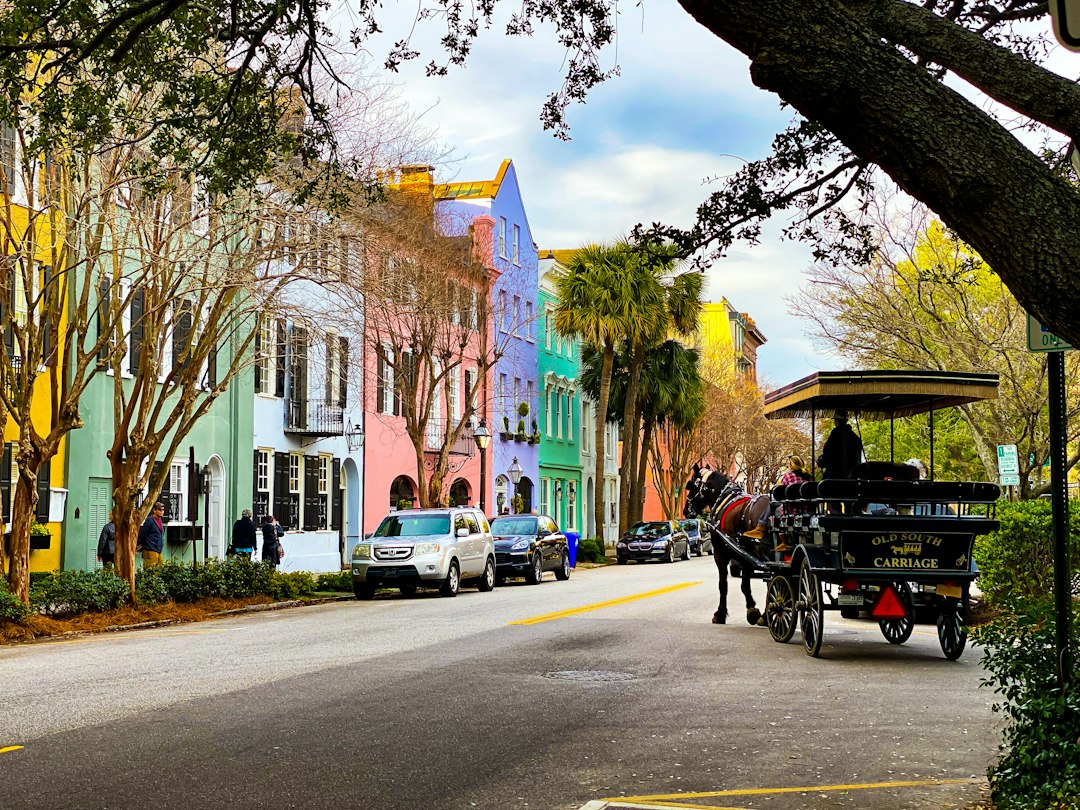
Charleston has a way of getting under people’s skin. The salt air, the historic streets, the proximity to the water, and a quality of life that’s genuinely hard to replicate elsewhere have made this city one of the most consistently sought-after real estate markets in the Southeast. But charm alone doesn’t explain what’s happening in the housing market right now. Charleston real estate demand is being shaped by a complex mix of economic forces, demographic shifts, and local factors that buyers and sellers need to understand before making a move.
This guide breaks down the full picture, from median prices and inventory levels to neighborhood-by-neighborhood demand, flood insurance realities, and seasonal timing, so that anyone navigating the Lowcountry market can do so with confidence and clarity.
Charleston Real Estate Demand at a Glance
The Charleston metro area continues to rank among the most competitive housing markets in South Carolina and the broader Southeast. Median home prices in the greater Charleston area have climbed significantly over the past several years, with current figures hovering in the mid-to-upper $400,000s depending on the submarket. In premium neighborhoods like Mount Pleasant and Daniel Island, median prices regularly push past $600,000 to $700,000.
Days on market (DOM) remain relatively low compared to national averages, with well-priced homes in desirable neighborhoods often going under contract within one to three weeks. Inventory levels, while slightly more balanced than during the frenzied 2021-2022 period, remain constrained. The months of supply in the Charleston area generally hovers between two and three months, which still favors sellers in most price ranges.
What’s notable about housing demand in Charleston is how broad-based it is. Demand isn’t concentrated in one buyer profile. Retirees from the Northeast, remote workers from major metros, military families stationed at Joint Base Charleston, and young professionals drawn by the local job market are all competing for the same limited pool of homes.
What’s Driving Demand in the Charleston Housing Market
Understanding why people want to move to Charleston helps buyers and sellers anticipate where the market is heading. Several structural forces are at work here.
Job Growth and Economic Anchors
Charleston’s economy has diversified significantly over the past two decades. Boeing’s manufacturing presence, the Port of Charleston (one of the busiest on the East Coast), a growing tech sector, and a robust healthcare industry anchored by MUSC have all contributed to sustained employment growth. Joint Base Charleston adds thousands of military households to the housing demand equation year-round, providing a steady stream of buyers who often need to move on short timelines and arrive pre-motivated.
Population Migration and Remote Work
South Carolina’s population growth has consistently outpaced national averages, and Charleston is the primary magnet. Buyers relocating from New York, New Jersey, Connecticut, Illinois, and California often find that their home equity from higher-cost markets gives them significant purchasing power in Charleston. Remote work flexibility has extended this trend, allowing buyers to prioritize lifestyle over proximity to a specific office. Charleston buyer interest from out-of-state households remains one of the most consistent demand drivers in the market.
South Carolina’s Tax Environment
South Carolina offers no estate tax, relatively low property taxes compared to Northeastern states, and significant tax benefits for retirees, including exemptions on Social Security income and a retirement income deduction. For households relocating from high-tax states, these savings can be substantial enough to meaningfully increase purchasing budgets, which in turn supports price appreciation across the market.
Charleston Housing Market Trends and Statistics
Price-per-square-foot data tells a useful story about where value is concentrated. Across the greater Charleston area, price per square foot has risen steadily, with downtown Charleston and Mount Pleasant commanding premiums over areas like North Charleston and Summerville. Year-over-year appreciation, while more moderate than the double-digit gains seen in 2021 and 2022, has remained positive and generally outpaces inflation.
Active listings across the Charleston metro have increased modestly compared to the historic lows of a few years ago, but the market hasn’t tipped into buyer’s territory. The gap between list price and sale price has narrowed in some segments, with sellers in the most desirable neighborhoods still achieving at or above asking price, while homes in less competitive price points or locations may see slightly more negotiation.
Is Charleston a Seller’s Market Right Now?
The short answer is yes, though with important nuances. With months of supply still below the four-to-six month range that signals a balanced market, sellers in most Charleston-area neighborhoods retain meaningful leverage. Multiple-offer scenarios are still common for well-presented homes priced accurately, particularly in the $400,000 to $700,000 range where buyer demand is concentrated.
That said, overpriced listings are sitting longer than they did two years ago. Buyers today are more rate-sensitive and more informed. A home that’s priced even five to ten percent above its true market value will often stall, accumulate days on market, and ultimately sell for less than it would have if priced correctly from day one. Seller leverage is real, but it isn’t unconditional.
Mount Pleasant vs. Charleston: Where Is Buyer Demand Strongest?
This is one of the most practical questions buyers and sellers in the Lowcountry face, and it’s one that generic market reports rarely answer with any specificity. Mount Pleasant and the City of Charleston serve different buyer profiles, and demand dynamics between them are genuinely distinct.
Mount Pleasant consistently ranks as one of the most desirable communities in South Carolina. Its combination of top-rated schools, newer construction options, lower flood risk in many neighborhoods, and suburban amenities makes it a magnet for families relocating from out of state. Demand in Mount Pleasant tends to be strong across a wider price band, and inventory moves quickly at nearly every price point. The trade-off is price: Mount Pleasant carries a premium, and buyers need to be prepared for that.
Downtown Charleston, by contrast, attracts a different buyer. The historic district’s walkability, dining scene, and cultural character draw buyers who are willing to pay for the lifestyle and accept certain limitations, including older building stock, historic district renovation regulations, and higher flood insurance exposure in some areas. Demand downtown is intense at the upper end of the market but can be more segmented by property type and specific block.
West Ashley offers more affordable entry points and has seen increasing interest from buyers priced out of Mount Pleasant. James Island appeals to buyers who want proximity to downtown without the price tag. Daniel Island functions almost as its own market, with strong demand from corporate relocations and buyers seeking a planned community feel with excellent amenities.
For sellers, understanding which submarket their home occupies is essential to pricing and marketing strategy. A Mount Pleasant seller and a West Ashley seller are not competing in the same pool.
How Flood Insurance Costs Are Reshaping Buyer Demand in the Lowcountry
This is a factor that deserves far more attention than it typically receives in market analyses. Flood insurance costs have become a material part of the affordability equation for many Charleston-area buyers, and in some cases, they’re reshaping demand patterns at the neighborhood level.
FEMA’s Risk Rating 2.0 methodology, which went into full effect in recent years, recalculated flood insurance premiums based on individual property risk rather than broad zone designations. For properties in high-risk flood zones, this has meant significant premium increases, with some homeowners seeing annual flood insurance costs jump from a few hundred dollars to several thousand dollars or more.
For buyers, this creates a real affordability consideration that doesn’t show up in the listing price. A home priced at $500,000 in a high-risk flood zone with $4,000 to $6,000 in annual flood insurance premiums carries a meaningfully different true cost than a comparable home in a lower-risk area. Smart buyers are factoring this into their offer calculations and their long-term ownership budgets.
From a demand perspective, properties with significant flood exposure are experiencing more buyer hesitation and longer days on market than comparable properties with lower flood risk. Sellers of flood-zone properties need to be proactive: having an elevation certificate on hand, understanding the current NFIP premium for the property, and being prepared to discuss mitigation options can make a meaningful difference in buyer confidence.
Buyers should request flood zone information and current insurance quotes early in their property search, not as an afterthought after falling in love with a home.
How Local Factors Shape Charleston Real Estate Demand
Historic District Regulations
Downtown Charleston’s historic district is one of the most intact in the country, and that’s a genuine asset. But it comes with regulatory complexity that affects both buyers and sellers. The Board of Architectural Review (BAR) has jurisdiction over exterior modifications to properties within the historic district, meaning that renovations, additions, and even some maintenance work require approval and must meet preservation standards.
For buyers, this means understanding what they can and cannot do with a historic property before purchasing. For sellers, it means that the premium commanded by a beautifully preserved historic home is real, but so is the buyer pool’s awareness of the responsibilities that come with ownership.
Neighborhood-by-Neighborhood Demand Variation
Demand in Charleston is not monolithic. Within a single zip code, demand can vary significantly based on school district boundaries, flood risk, proximity to amenities, and the character of the immediate neighborhood. Buyers and sellers benefit enormously from working with someone who understands these micro-level differences rather than relying on broad metro-level statistics.
What Buyers Need to Know About Competing in Charleston
Charleston buyer interest from both local and out-of-state households means that well-priced homes in desirable areas don’t sit long. Buyers who want to compete effectively need to come prepared.
Pre-approval, not just pre-qualification, is essential. Sellers and their agents take pre-approval letters from reputable lenders seriously, and a buyer without one is at a disadvantage in any multiple-offer situation. Buyers should also understand escalation clauses: a pre-written provision that automatically increases their offer up to a specified ceiling if competing offers come in. Used correctly, escalation clauses can help buyers win without necessarily overbidding blindly.
Mortgage rate sensitivity is a real factor in the current market. As rates have remained elevated compared to the historic lows of 2020-2021, many buyers are working with tighter affordability windows. This has actually created some opportunity in the mid-to-upper price ranges, where the pool of qualified buyers is thinner. Buyers in the $600,000 and above range may find slightly less competition than those in the $350,000 to $500,000 range, where demand is most concentrated.
Neighborhoods offering the best value relative to demand right now include parts of West Ashley, certain sections of Summerville, and some emerging areas in North Charleston where infrastructure investment is ongoing. These aren’t the most glamorous addresses, but for buyers focused on long-term appreciation and livability, they represent genuine opportunity.
What Sellers Need to Know to Maximize Demand for Their Home
Pricing strategy is everything in the current Charleston market. A comparative market analysis (CMA) grounded in recent comparable sales, adjusted for condition, location, and current inventory, is the foundation of any effective listing strategy. Sellers who price based on what they need to net, or based on what a neighbor sold for two years ago, often find themselves chasing the market downward after an overpriced listing stagnates.
Home preparation matters more than many sellers expect. Professional photography, staging, and addressing deferred maintenance before listing can meaningfully reduce days on market and support a stronger sale price. First impressions in online listings drive showing traffic, and showing traffic drives offers.
Marketing beyond the MLS, including targeted digital advertising, social media exposure, and outreach to the relocation buyer community, can make a significant difference in reaching the out-of-state buyers who represent a large share of Charleston’s demand pool.
When Is Buyer Demand Highest in Charleston? A Seasonal Market Guide
Charleston’s real estate market follows a seasonal rhythm that sellers should understand when timing their listings. Buyer activity typically begins accelerating in late February and early March, as families with school-age children start planning moves to coincide with the end of the academic year. The spring market, running from March through May, is historically the most active period for both listings and sales volume.
Summer remains active in Charleston, partly because military relocations and corporate transfers don’t follow a traditional seasonal calendar. The summer months also attract buyers who are visiting Charleston for vacation and decide to make a more permanent move.
Activity typically softens in late fall and winter, though this can actually be an advantageous time for motivated sellers. Competition from other listings is lower, and the buyers who are active during the off-season tend to be serious and often under time pressure. Sellers who list in November or December may find fewer showings but a higher percentage of those showings converting to offers.
For sellers targeting maximum exposure and the highest probability of a multiple-offer scenario, listing in March or April generally offers the best conditions. For sellers who want less competition and are comfortable with a slightly longer timeline, the fall window can be surprisingly effective.
Why Some Residents Are Leaving Charleston, and What It Means for Prices
No honest market analysis ignores outmigration, and Charleston does have it. The primary drivers of residents leaving the area include affordability fatigue, rising insurance costs (both flood and homeowners), and concerns about long-term climate risk in a coastal market.
Longtime residents who purchased homes years ago at significantly lower prices sometimes find that their property tax bills, insurance premiums, and overall cost of living have risen to the point where relocating to a less expensive area makes financial sense. Some are cashing out equity built over decades and moving inland to the Upstate, to other Southern states, or back to family networks elsewhere.
What does this mean for prices? Outmigration from Charleston creates some additional inventory, which is a modest moderating force on price appreciation. However, the volume of inbound buyers from higher-cost markets continues to significantly outpace outbound residents. For every long-term Charlestonian who sells and moves to Greenville or Asheville, there are multiple buyers arriving from the Northeast or Midwest ready to purchase. The net effect is that outmigration is not a threat to Charleston home values in any near-term scenario, but it does contribute to the gradual normalization of the market from the extreme seller conditions of a few years ago.
Will Charleston Real Estate Demand Stay Strong?
The structural case for continued demand in Charleston is solid. Population growth in South Carolina is projected to continue, the state’s economic base is diversifying, and Charleston’s lifestyle appeal is not diminishing. The city consistently appears on national “best places to live” and “best places to retire” lists, which feeds ongoing inbound interest.
The risks worth monitoring include the affordability ceiling (at some point, price appreciation outpaces the purchasing power of even well-qualified buyers), rising insurance costs, and the longer-term question of how climate change affects coastal real estate values. These are real considerations, not hypothetical ones. But they are factors that a knowledgeable local agent can help buyers and sellers evaluate in the context of their specific situation and property.
A market crash scenario for Charleston seems unlikely given the underlying demand drivers, low unemployment, and the continued influx of equity-rich relocation buyers. A gradual moderation of appreciation rates is more probable than a sharp price decline.
What Is Your Charleston Home Worth in Today’s Demand-Driven Market?
One of the most common mistakes sellers make is relying on automated valuation tools (AVMs) from national portals to estimate their home’s value. These tools work from broad data sets and cannot account for the micro-level factors that significantly affect value in a market as nuanced as Charleston: the specific flood zone designation, the school district, the condition of the home, the character of the immediate block, or the current demand dynamics in that specific neighborhood.
A professional comparative market analysis from a local expert who actively works in the Charleston and Mount Pleasant markets provides a far more accurate and actionable picture. It accounts for what buyers are actually paying right now, not what they paid six months ago, and it gives sellers a realistic pricing target that maximizes demand without leaving money on the table.
For buyers, understanding what a home is truly worth in the current demand environment is equally important. Paying significantly above market in a competitive moment can affect equity building and future resale flexibility. A trusted local advisor can help buyers assess whether a listing is priced fairly or whether the competitive pressure of a multiple-offer situation is pushing the price beyond supportable value.
Bryan Crabtree Real Estate provides personalized home valuations grounded in current local market data for buyers and sellers throughout Charleston and Mount Pleasant. Connecting with a local expert who knows these submarkets at a granular level is one of the most valuable steps anyone can take before making a real estate decision in the Lowcountry.
Frequently Asked Questions About Charleston Real Estate Demand
Are home prices dropping in Charleston, SC?
Home prices in Charleston are not broadly dropping. Appreciation has moderated from the rapid pace of 2021-2022, and some overpriced listings are seeing price reductions before selling, but overall median prices remain elevated and have continued to trend upward on a year-over-year basis. The market is normalizing, not declining.
Is Charleston, SC a good place to invest in real estate?
Charleston offers a strong case for real estate investment, supported by consistent population growth, a diversified economy, strong rental demand from students, military personnel, and young professionals, and significant short-term rental demand driven by tourism. The historic district and areas near the beach command premium nightly rates for short-term rentals. Investors should factor flood insurance costs and local short-term rental regulations into their analysis.
Why are people moving out of Charleston, SC?
The most common reasons include rising housing costs, increasing flood and homeowners insurance premiums, traffic congestion as the region has grown, and concerns about long-term climate risk in a coastal location. Some long-term residents are also choosing to monetize significant equity appreciation and relocate to lower-cost areas.
What is the hottest real estate market in South Carolina?
Charleston and the surrounding Lowcountry region consistently rank as the most active and competitive real estate market in South Carolina, driven by lifestyle appeal, economic growth, and strong inbound migration. Greenville has also emerged as a significant market in the Upstate, but Charleston leads on both price and demand intensity.
Is Charleston a seller’s market right now?
Yes, in most price ranges and most neighborhoods, Charleston remains a seller’s market characterized by limited inventory, relatively short days on market, and list-to-sale price ratios that favor sellers. The degree of seller advantage varies by price point and location, with the most competitive conditions found in the $350,000 to $600,000 range in desirable school districts.
How do flood zones affect home buying in Charleston?
Flood zone designations affect both the availability and cost of flood insurance, which is required for federally backed mortgages on properties in high-risk zones. High-risk flood zone properties may carry annual insurance premiums of several thousand dollars, which affects total ownership cost and, increasingly, buyer demand. Buyers should request an elevation certificate and obtain insurance quotes before finalizing any purchase decision on a coastal or low-lying property.
The Charleston real estate market rewards preparation, local knowledge, and clear-eyed analysis. Whether buying, selling, or simply trying to understand where the market is heading, working with an advisor who knows the Lowcountry at the neighborhood level makes all the difference.
Leave a Reply