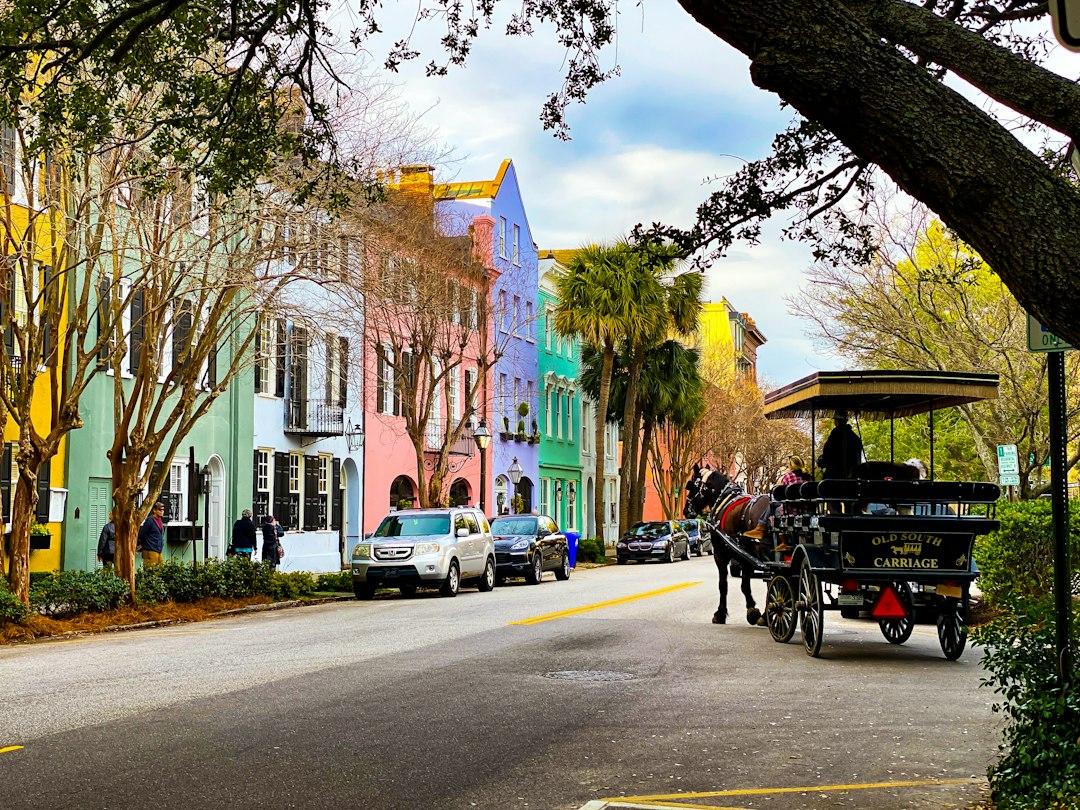
Few cities in the United States offer the kind of architectural richness that Charleston, South Carolina delivers on nearly every block. From the pastel-painted facades lining Rainbow Row to the grand antebellum estates anchoring South of Broad, Charleston historic homes are genuinely unlike anything else on the American real estate market. For buyers seriously considering a purchase in one of these storied neighborhoods, the appeal is obvious. But so is the complexity. Understanding what you’re buying, what it will cost to maintain, and what rules govern what you can change is essential before making an offer.
This guide is designed to give prospective buyers a clear, honest look at what living in historic Charleston actually involves, from neighborhood comparisons and price realities to regulatory nuances and tax incentives that most buyers never hear about until it’s too late.
What Makes Charleston Historic Homes Unique
Charleston’s housing stock spans nearly three and a half centuries. Some of the oldest structures still standing date to the late 1600s and early 1700s, making this one of the few American cities where colonial-era homes remain in active residential use. The architectural diversity is remarkable, and buyers benefit from understanding the major styles before touring properties.
The Charleston Single House is perhaps the most iconic local form: a narrow structure, typically one room wide, oriented perpendicular to the street with a side-facing piazza (porch) designed to catch coastal breezes. The Double House is wider, with rooms on both sides of a central hall. Antebellum architecture (roughly 1800 to 1860) brought Greek Revival grandeur, including columned porticos and symmetrical facades. The Italianate style, popular from the 1840s through the 1880s, introduced bracketed cornices, arched windows, and ornate woodwork that still defines many homes in Ansonborough and Harleston Village.
Historic designation in Charleston is administered through the Board of Architectural Review and applies to properties within officially designated historic districts. Designation affects what owners can change on the exterior, which is a critical factor for buyers to understand before closing.
Exploring Charleston’s Most Iconic Historic Neighborhoods
The Charleston peninsula contains several distinct historic neighborhoods, each with its own character, price tier, and lifestyle profile. Here is a closer look at the most significant ones for buyers.
South of Broad
This is Charleston’s most prestigious historic address. South of Broad encompasses the southern tip of the peninsula and is home to some of the largest and most architecturally significant properties in the city. Battery Street mansions with sweeping views of the harbor, grand Double Houses, and immaculately maintained gardens define the streetscape. Prices here regularly exceed $2 million and can climb well past $5 million for larger estate properties. Walkability is excellent, with the Battery waterfront, White Point Garden, and the French Quarter all within easy reach.
Harleston Village
Located just north of South of Broad, Harleston Village offers slightly more accessible price points while still delivering genuine historic character. Single Houses and Italianate-style homes predominate. Buyers here tend to be professionals and families who want the historic aesthetic without the premium of the Battery. Entry-level historic homes in Harleston Village can start in the $900,000 to $1.4 million range, with larger properties commanding considerably more.
Ansonborough
One of Charleston’s oldest neighborhoods, Ansonborough sits between the French Quarter and the upper peninsula. It underwent significant restoration in the mid-20th century and today offers a mix of well-preserved historic homes and sensitively renovated properties. Proximity to East Bay Street restaurants, the Gaillard Center, and Marion Square makes this neighborhood attractive to buyers who prioritize walkable urban living. Prices are competitive with Harleston Village.
Famous Historic Homes and Landmarks Worth Knowing
Several landmark homes shape the character and desirability of Charleston’s historic neighborhoods. The Nathaniel Russell House on Meeting Street, built in 1808, is celebrated for its free-flying spiral staircase and Federal-style architecture. The Calhoun Mansion on Meeting Street is the largest single-family historic home in Charleston, with over 35 rooms. The Edmondston-Alston House on East Battery offers harbor views and an intact 19th-century interior.
These homes function as museum properties today, but they set the standard for craftsmanship and scale that buyers will encounter throughout the historic district. Understanding what original plaster work, heart pine floors, and hand-crafted millwork look like in their finest form helps buyers evaluate condition and authenticity in properties they tour.
Which Charleston Historic Neighborhood Fits Your Budget and Lifestyle?
Competitors frequently list neighborhoods without helping buyers make practical decisions. Here is a direct breakdown to help buyers match budget and lifestyle priorities.
- South of Broad: Best for buyers with $2 million or more who prioritize prestige, waterfront proximity, and the most architecturally significant properties. Quieter residential feel, lower foot traffic.
- Harleston Village: Best for buyers in the $900,000 to $2 million range who want historic character with a slightly more relaxed pace. Good for families and remote professionals.
- Ansonborough: Best for buyers who want walkable access to dining and culture. Strong rental potential for investors. Prices are similar to Harleston Village but inventory turns over more frequently.
- French Quarter / Elliotborough: Emerging options for buyers in the $700,000 to $1.2 million range who accept smaller footprints in exchange for location and character.
Buying a Historic Home in Charleston: What to Expect
The Board of Architectural Review (BAR)
The Board of Architectural Review governs exterior changes to properties within Charleston’s historic districts. Any modification visible from a public right-of-way, including window replacements, paint colors, roofing materials, fencing, and additions, requires BAR approval before work begins. The BAR meets monthly, and the review process can add weeks or months to renovation timelines. Buyers who plan to make changes need to factor this into their schedules and budgets from the start.
Inspection Considerations
Historic home inspections require specialists familiar with older construction methods. Common issues include tabby or brick foundation systems that behave differently from modern concrete slabs, knob-and-tube or early aluminum wiring, lead paint on pre-1978 surfaces, plaster walls that conceal moisture damage, and single-pane windows that affect energy efficiency. A standard home inspector may miss issues that a historic property specialist would catch. Budget for a thorough inspection and, where appropriate, separate structural and environmental assessments.
Federal and South Carolina Historic Tax Credits: What Buyers Need to Know
This is one of the most overlooked advantages of purchasing a designated historic property, and it can meaningfully offset renovation costs.
The Federal Historic Tax Credit provides a 20% tax credit for qualified rehabilitation expenditures on income-producing historic properties. For buyers who intend to rent a historic home or use it as an investment property, this credit can be substantial. Owner-occupied residences do not qualify for the federal credit directly, but partnership structures sometimes make it accessible.
South Carolina offers a separate state historic tax credit of up to 25% for certified rehabilitations of historic structures. Unlike the federal program, South Carolina’s credit applies to owner-occupied residences under certain conditions, making it directly relevant to homebuyers planning significant renovations.
Buyers should consult with a tax professional and a local real estate agent familiar with historic properties before assuming eligibility. The application process requires documentation through the State Historic Preservation Office, and work must meet the Secretary of the Interior’s Standards for Rehabilitation.
Historic Home vs. New Construction in Charleston: A Real Cost Comparison
Buyers often ask whether a historic home or new construction makes more financial sense. The honest answer depends on priorities, but here is a realistic side-by-side look.
- Purchase price: Historic homes in prime locations often carry a premium for location and character. New construction in comparable areas (if available) may offer more square footage per dollar.
- Renovation and restoration: Historic homes frequently require immediate or near-term investment in systems (HVAC, electrical, plumbing) and surfaces (windows, roofing). Budget $50 to $150 per square foot for meaningful renovation, more for full restoration using period-appropriate materials.
- Ongoing maintenance: Older materials require more frequent attention. Historic windows, wood siding, and slate or tile roofs cost more to maintain than modern equivalents but often last longer when properly cared for.
- Insurance: Historic homes require specialized coverage. Standard replacement cost policies may not cover period-appropriate materials. Expect to pay a premium for adequate coverage.
- Resale value: Well-maintained historic homes in desirable Charleston neighborhoods have demonstrated strong long-term appreciation. Historic designation can protect neighborhood character and support values over time.
- Tax incentives: New construction offers no historic tax credit opportunities. A qualifying historic rehabilitation can recover a meaningful portion of renovation costs.
Hidden Costs and Maintenance Realities
Restoration and renovation are not the same thing in the context of historic properties. Renovation typically means updating a home to modern standards. Restoration means returning it to a specific historic period using appropriate materials and methods. The BAR generally requires restoration-level work on exterior elements, which means sourcing period-appropriate windows, siding, and hardware that cost significantly more than modern equivalents.
Insurance deserves special attention. Standard homeowner’s policies are often inadequate for historic properties because they calculate replacement cost based on modern materials. If a historic home suffers significant damage, rebuilding with original-quality materials, custom millwork, and period-appropriate finishes can far exceed what a standard policy pays. Buyers should work with insurers who specialize in historic properties and ensure their policy reflects true replacement cost.
Historic Home Buyer’s Checklist: What to Verify Before You Make an Offer
No other resource in this space provides buyers with a practical pre-offer checklist. Here is what to verify before committing to a Charleston historic home purchase.
- Confirm whether the property is within an official historic district and subject to BAR jurisdiction.
- Request documentation of any past BAR approvals and completed renovation permits.
- Identify any pending BAR applications or violations associated with the property.
- Order a historic property-specific inspection from a qualified specialist.
- Obtain a separate structural engineering assessment if the foundation type is tabby, brick, or pier-and-beam.
- Test for lead paint and asbestos if the home was built before 1978.
- Review the electrical panel and wiring type (knob-and-tube or early aluminum wiring may require full replacement).
- Evaluate window condition, as historic windows are expensive to restore and even more expensive to replace under BAR guidelines.
- Confirm flood zone status and obtain a current elevation certificate.
- Research available historic tax credits and confirm property eligibility before closing.
- Get quotes from at least two insurers who specialize in historic properties.
- Discuss renovation plans with a local agent who understands BAR timelines before finalizing your offer price.
How a Local Charleston Agent Helps You Navigate Historic District Rules
The regulatory environment surrounding Charleston historic homes is genuinely complex, and it is one area where working with a local expert makes a measurable difference. A knowledgeable local agent can identify properties with clean permit histories versus those with unpermitted work that could create legal liability for a new owner. They understand which renovation plans are likely to receive BAR approval and which will face pushback, saving buyers from purchasing a home with a vision they cannot execute.
Local agents also maintain relationships with historic property specialists, including inspectors, restoration contractors, and preservation attorneys, who are essential to a smooth transaction. For buyers coming from out of state or unfamiliar with the Lowcountry market, this network is invaluable. Bryan Crabtree and his team bring deep familiarity with Charleston’s historic districts, pricing nuances, and the practical realities of buying in this unique market.
How to Search for Historic Homes on the Charleston MLS
Searching the Charleston MLS for historic properties requires more than a standard keyword search. Buyers can filter by year built to surface older properties, but this alone does not confirm historic district designation. The most efficient approach is to search by neighborhood (South of Broad, Harleston Village, Ansonborough) and cross-reference with the City of Charleston’s official historic district maps.
Working with a local agent who has direct MLS access and can set up customized searches based on historic district location, year built, and price range saves significant time. Inventory in the most desirable historic neighborhoods is limited, and well-priced properties often move quickly. Setting up alerts and having a pre-approval in place before touring is essential in this market.
Frequently Asked Questions About Charleston Historic Homes
Where is the oldest house in Charleston?
The Powder Magazine on Cumberland Street, built around 1713, is considered one of the oldest surviving structures in Charleston. Among residential properties, several homes in the French Quarter and South of Broad date to the early 1700s, making Charleston one of the few American cities with such an intact colonial-era housing stock.
What are some of the notable old homes in Charleston?
The Nathaniel Russell House, the Calhoun Mansion, the Edmondston-Alston House, and the Heyward-Washington House are among the most celebrated. Many other significant homes remain in private ownership throughout South of Broad and Harleston Village.
Can you renovate a historic home in Charleston freely?
Not on the exterior. Any exterior change visible from a public right-of-way requires Board of Architectural Review approval. Interior changes generally do not require BAR review, though building permits still apply. Buyers with significant renovation plans should discuss them with a local agent before making an offer.
What is the Board of Architectural Review in Charleston?
The BAR is a city body that reviews proposed exterior changes to properties within Charleston’s historic districts. Its goal is to preserve the architectural character of the city. Approval is required before exterior work begins, and the review process typically takes four to eight weeks per application.
Are historic homes in Charleston good investments?
Historically, yes. Well-maintained properties in Charleston’s core historic neighborhoods have appreciated steadily over time. Historic designation protects neighborhood character and limits the kind of development that can erode property values. Buyers should factor in higher maintenance and renovation costs when evaluating overall return.
How do I search for historic homes on the Charleston MLS?
Start by working with a local agent who can filter by neighborhood, year built, and historic district designation. Searching by neighborhood name combined with a year-built range (pre-1940 is a common starting point) surfaces the most relevant inventory. Having a buyer’s agent set up automated alerts ensures you see new listings as soon as they appear.
Buying a historic home in Charleston is one of the most rewarding real estate decisions a buyer can make, provided they go in with clear eyes and the right guidance. The combination of architectural beauty, strong long-term value, and the experience of living in historic Charleston is genuinely hard to replicate anywhere else. Connecting with a local expert who knows these neighborhoods, these regulations, and this market is the single most effective step any buyer can take before starting the search.
Leave a Reply